
In Washington, DC, there's an invisible cost that hundreds of thousands of residents pay every day: the time tax. This term refers to the extra time DC residents spend on public transit compared to driving—a hidden penalty affecting quality of life, economic opportunity, and social equity throughout our city.
Quantifying the Disparity
Recent research by Karthik Balasubramanian quantifies the disparity between transit and driving times in DC. Analyzing 2,070 trips connecting all 46 Advisory Neighborhood Commissions (ANCs) using Google Maps data during weekday mid-morning travel, the study found that transit takes, on average, 2.67 times longer than driving.
The average time difference is 30.6 minutes per trip, with the worst routes having penalties exceeding 122.8 minutes. In fact, 10% of routes have a time penalty exceeding 51 minutes.
What does this mean for everyday life? A typical transit-dependent resident loses roughly 60% of their free time compared to if they could drive. This isn't just inconvenient—it's life-altering.
Unequal Burden
While the time tax affects residents of all ages and socioeconomic backgrounds, it doesn't hit everyone equally. Ward 8 bears the heaviest burden, facing an average transit penalty of 37.3 minutes, which is 22% higher than the DC average.
Consider a Ward 8 resident who works in Ward 2. Their daily time tax is 68 minutes, totaling 5.7 hours weekly. That's nearly six hours of lost family time, educational opportunities, or rest each week.
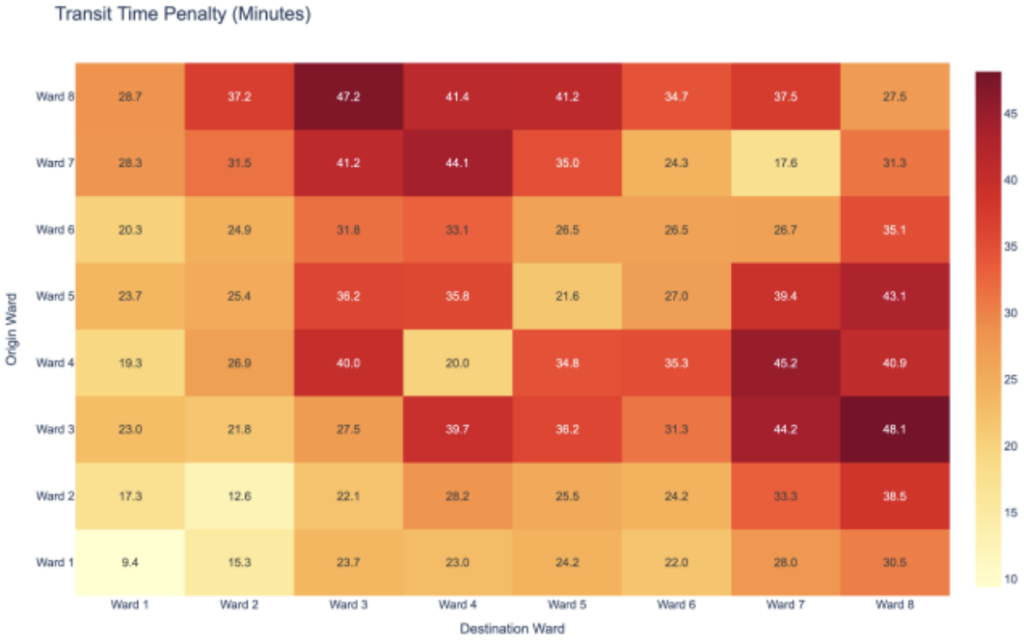 Figure 1: Transit Time Penalty Between Wards
The research reveals a sobering reality: across every analyzed route in DC, transit consistently takes significantly longer than driving. This creates tangible barriers between communities and reinforces isolation.
The contrast between Wards 8 and 2 is particularly striking. Despite nearly identical car ownership rates (46.2% and 47.2% respectively), Ward 8 residents endure a time tax of 37.3 minutes—substantially higher than the mere 25.4 minutes experienced in Ward 2.
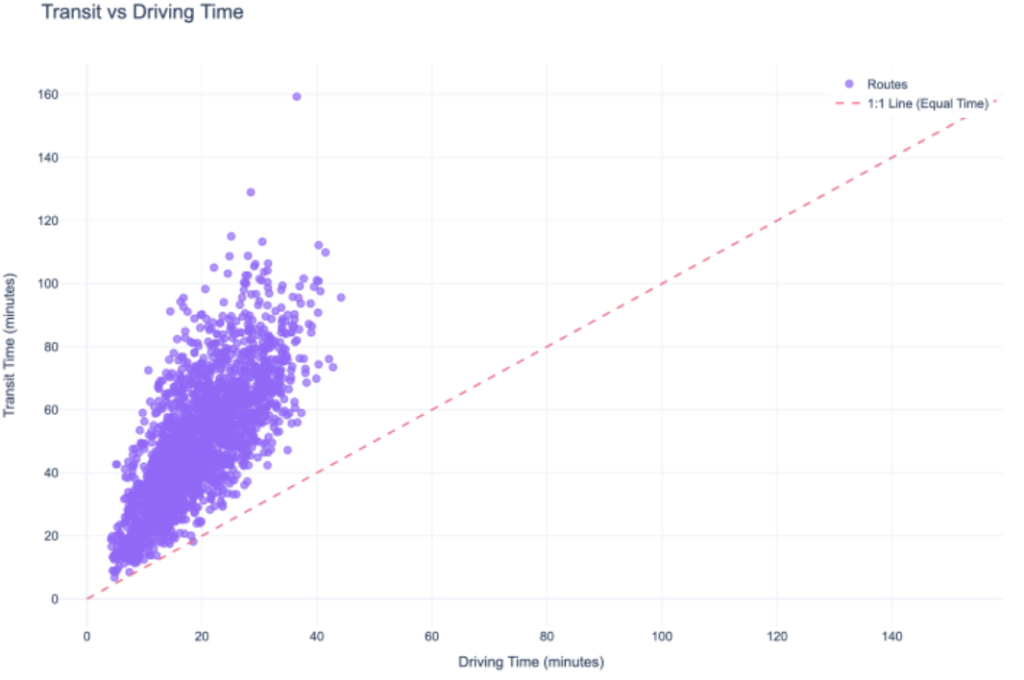 Figure 2: Difference in Time Between Transit and Driving
Economic Impact
This time tax translates directly into economic impact.
Personal economic impact: The average commuter spends 30.6 minutes × 2 trips × 5 days = 5.1 hours weekly on extra transit time. At DC's median wage ($35/hour), this equals $178.50 weekly or $9,282 annually, comparable to AAA's estimated annual cost of car ownership at $10,728.
Transit-dependent residents essentially face a difficult choice: pay with their time (worth approximately $9,282 annually) or pay with their money for a car ($10,728 annually).
Citywide economic impact: With 250,000 transit-dependent residents each losing an extra 5.1 hours weekly to longer commutes, DC suffers a collective loss of 1.28 million hours of productivity every week. At the city's median wage, this translates to $44.60 million in lost economic value weekly—or $2.32 billion annually.
For perspective, this productivity loss represents nearly 13% of DC's entire annual budget of approximately $18 billion. The time tax thus drains our city of billions in economic potential and opportunity each year.
Impact on Students
Students in Wards 7 and 8 may face average commutes exceeding 50 minutes to schools in other wards, potentially adding 140+ hours of commute time per school year compared to driving. This impacts:
- Participation in extracurricular activities
- Study time
- School performance due to transit-related tardiness
- Overall educational outcomes
The Self-Perpetuating Cycle
We're trapped in a cycle that perpetuates itself:
- Our car-dependent system fills roads with cars
- Buses become stuck behind those cars
- Transit becomes slow and unreliable
- More people choose cars when possible
- Roads become even more congested
This downward spiral forces many to buy cars, while those who can't afford them remain trapped paying the time tax.
Real Lives, Lost Opportunities
These aren't just numbers—they represent real lives and lost opportunities. DC residents who depend on transit lose full days of their lives every month. They miss family dinners, children's bedtimes, educational opportunities, and moments of rest.
The time tax isn't inevitable. It's the result of policy choices, and with smarter investments, we can build a DC where everyone's time is valued equally, regardless of whether they drive, take transit, bike, or walk.
– DDS